
Specification
| Weight | N/A |
|---|---|
| Dimensions | N/A |
| Photo # | 1027 |
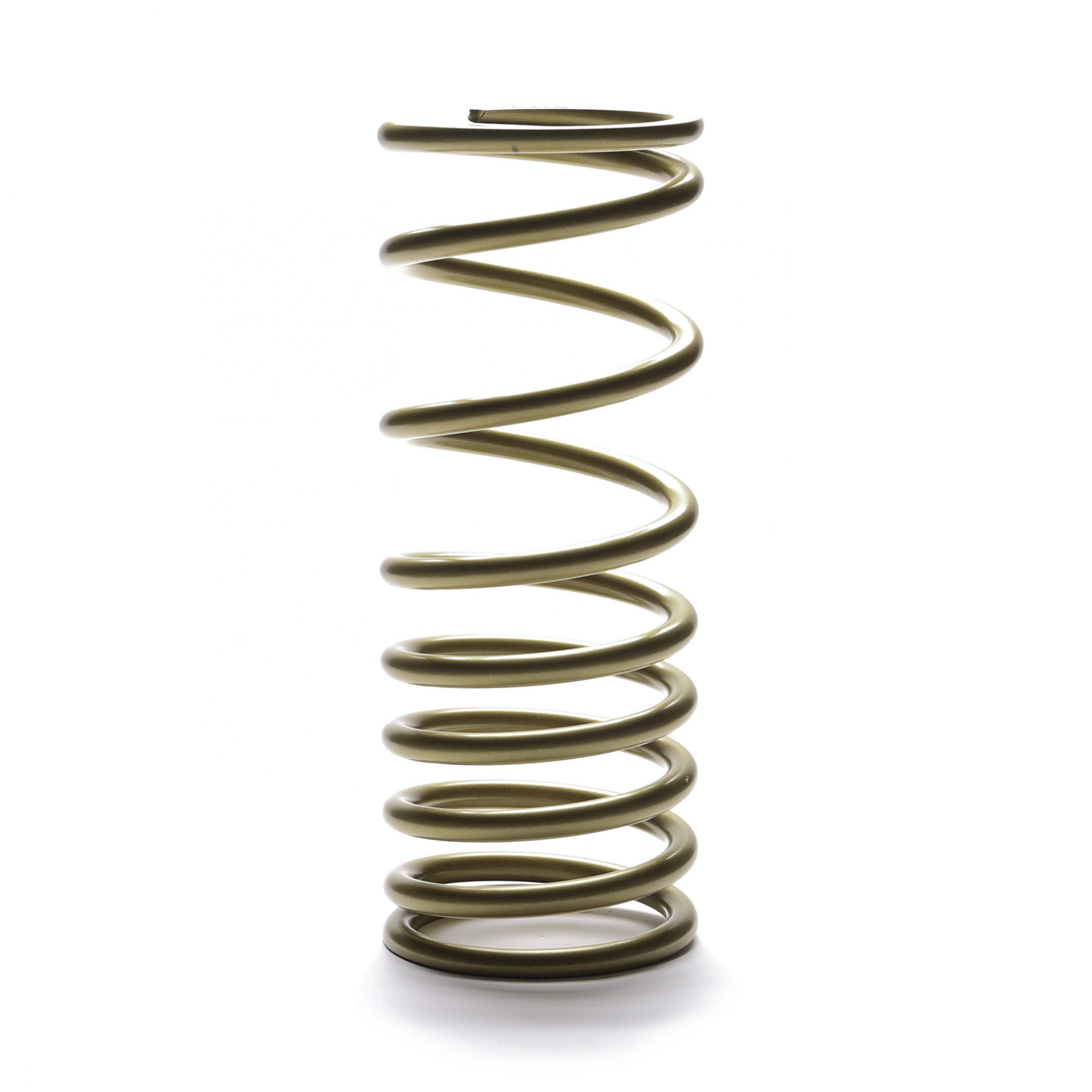
Progressive coil springs have a variable spring rate that increases as the springs compress, providing a softer initial response and progressively greater resistance as suspension load and travel increase.
Progressive coil springs use varying coil spacing to control how the spring responds throughout its travel. As the spring compresses, the closely spaced coils contact each other and become inactive, a process known as coil bind. With fewer active coils carrying the load, the spring rate increases progressively through compression.
Progressive coil springs can improve traction, weight transfer, suspension control, and handling by providing different spring characteristics throughout suspension travel. Thereby improving performance in areas such as corner entry stability, mid-corner control, forward bite, and corner-exit traction.
We worked closely with racers to develop Landrum Progressive Coil Springs, ensuring they deliver the performance, durability, and long-term consistency you need.
While constant rate coil springs are wound to have equal spacing between the coils, coil spacing of progressive springs varies with narrow spacing at one end of the spring, and wider spacing at the other.
Landrum Progressive Coil Springs are produced from the highest-quality, US-made High Tensile Chrome Silicon Alloy Steel, providing superior strength, reliability, and consistent performance without losing free height, even after repeated coil bind.
Produced using cutting-edge design and manufacturing technology to deliver proven durability and the most consistent spring rates in the industry.
Every spring includes a dyno sheet showing it meets Landrum’s strict ±2% rate specification.
Landrum Progressive Coil Springs are available in a 5-inch OD, 13-inch length, with four progressive spring rate options.
Diameter: 5” OD
Length: 13”
Rates:
A rate such as 125–300 lb./in. indicates the spring operates through a range of spring rates. It begins at a lower rate and progresses toward a higher rate as the spring is compressed.
Landrum Progressive Coil Springs are engineered to withstand repeated compression to coil bind without losing free height or performance. Their High Tensile Chrome Silicon Alloy Steel and manufacturing processes help the springs resist permanent deformation.
A ±2% rate specification means the tested spring rate is held within 2% of its specified rate. Landrum tests its springs and provides a dyno sheet documenting spring performance.
The dyno sheet provides measured performance data for the individual spring, allowing racers to verify its characteristics rather than relying only on a theoretical spring rate. Landrum’s technical documentation says its dyno sheets provide load data throughout spring displacement.
| Weight | N/A |
|---|---|
| Dimensions | N/A |
| Photo # | 1027 |
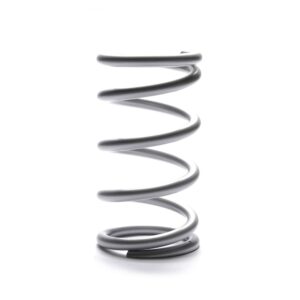
Landrum Elite Series racing coil springs are Landrum’s premium line of conventional racing springs, developed for racers who demand exceptional consistency and repeatable performance from their suspension. Designed with IMCA and UMP dirt track competition in mind, Elite Series springs provide precise, dependable spring performance for demanding circle track racing applications.
Elite Series springs are manufactured from high-tensile chrome-silicon steel and preset to solid height to help maintain their free height and spring rate through repeated use. Each spring is individually rate tested to a ±2% tolerance and includes a dyno sheet documenting its tested rate, providing racers with verified spring performance they can rely on when setting up and maintaining their race car.
Elite Series racing coil springs are made from USA-made high-tensile chrome-silicon alloy steel chosen for its strength, durability and ability to maintain consistent spring characteristics under the repeated compression and extension of racing use.
Advanced spring-design software and proven engineering principles are used to develop Elite Series springs with precise, repeatable performance throughout their working range. Landrum also draws on input from racers and chassis builders to develop spring designs that address the requirements of competitive dirt track applications, including IMCA and UMP racing.
Elite Series springs are preset to solid height during manufacturing to help stabilize the spring and minimize changes in free height during use. This additional manufacturing step helps the spring maintain consistent dimensions and performance through repeated racing cycles.
Every Elite Series racing coil spring is individually tested to confirm its actual spring rate. Each spring is supplied with a dyno sheet documenting its measured performance, providing racers with verification of the spring they are installing on the car.
Each Elite Series spring is compressed through its working range to measure load in relation to spring travel and verify its actual rate. The spring must test within ±2% of its specified rate, helping ensure consistent, repeatable performance from one Elite Series spring to another.
Elite Series racing coil springs are used across a range of IMCA and UMP dirt track classes. For racers looking for dirt modified springs, Elite Series applications include IMCA Modifieds and SportMods as well as UMP Modifieds. Elite Series springs are also used in IMCA Hobby Stocks, UMP Late Models, Sportsman, Super Stock, Street Stock, Factory Stock and other circle track classes with conventional coil spring suspension configurations.
Landrum Elite Series racing coil springs are available in multiple diameters, free lengths and spring rates for front and rear suspension applications. Available Elite Series configurations include:
Use the Landrum Parts Finder to view available Elite Series racing coil springs by diameter, length and spring rate, or contact Landrum for additional product information.
Stacking two racing coil springs creates a combined spring rate that is lower than the rate of either spring used individually. In this video, Landrum demonstrates the effect using a scale and load cell, then explains how to calculate the resulting spring rate when two springs are used together.
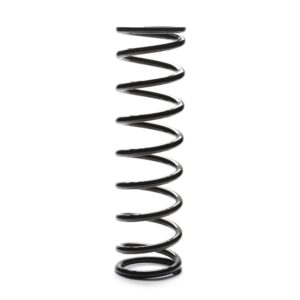
Front drag racing coil springs are taller than OEM springs and use softer rates to give a car the correct ride height while providing more stored energy for instant weight transfer to the rear tires during launch. This helps to improve traction and contribute to more consistent 60-foot and quarter-mile performance.
Landrum Performance drag racing coil springs are produced with superior materials and manufacturing techniques to deliver the performance, reliability, and consistency you need to win.
Landrum drag race springs are available for the front suspension of GM vehicles and are offered in configurations to fit OEM A-Arms and Aftermarket A-Arms with no modifications required. Springs with a 5” outer diameter and 18” length are available for 1964-1972 GM vehicles, and springs with a 5.5” outer diameter and 18” length are offered for 1973 and newer models.
All front springs are closed and ground on one end to provide proper contact with the frame. The opposite end is either open to properly fit into the lower control arm of OEM A-Arms or closed for Aftermarket A-Arms.
A taller, lower-rate front spring compresses farther under the vehicle’s weight than a shorter, higher-rate spring while maintaining the desired ride height. This increased compression stores more energy in the spring and provides additional extension travel.
During launch, acceleration unloads the front suspension, allowing the spring to release its stored energy and extend. As the front suspension rises, the chassis rotates rearward, helping transfer load to the rear tires. This increases available rear-tire traction and helps the car put power to the track more effectively.
Spring rate, spring length, available suspension travel, and shock settings work together to control how quickly and how far the front suspension extends during launch.
When used in the front suspension, drag racing coil springs can provide several performance advantages:
Landrum uses high-tensile chrome-silicon alloy steel for drag race coil springs as it provides the strength, resilience, and fatigue resistance required for demanding drag racing applications while helping the spring maintain consistent rate and free height over repeated compression cycles.
Our Front Drag Racing Coil Springs are available in a range of rates:
The appropriate spring rate depends on factors such as vehicle weight, front-end weight, suspension configuration, and intended application.
Front drag racing coil springs are typically taller and have softer spring rates than OEM springs. Their greater free height allows them to compress farther under vehicle weight while maintaining the required ride height, providing greater stored energy and more available suspension extension.
Stored energy in a drag racing spring is the potential energy created when the spring compresses under the vehicle’s weight. The amount of stored energy depends primarily on spring rate and how far the spring is compressed from its free height. A longer, softer spring stores more energy than a shorter, stiffer spring under the same load because it compresses farther while maintaining a similar installed ride height.
Front drag racing coil springs can maintain the desired ride height despite being taller than OEM springs. Their softer spring rates allow greater compression under vehicle weight, resulting in the intended installed height.
Landrum drag race springs are cold wound, not hot wound. Each is properly heat treated and stress relieved to ensure the sides of the spring remain parallel during installation.
See our drag racing spring technical information for additional technical and application information.
Landrum’s spring compressor is designed to make installation of its 18-inch Front Drag Racing Coil Springs easier.
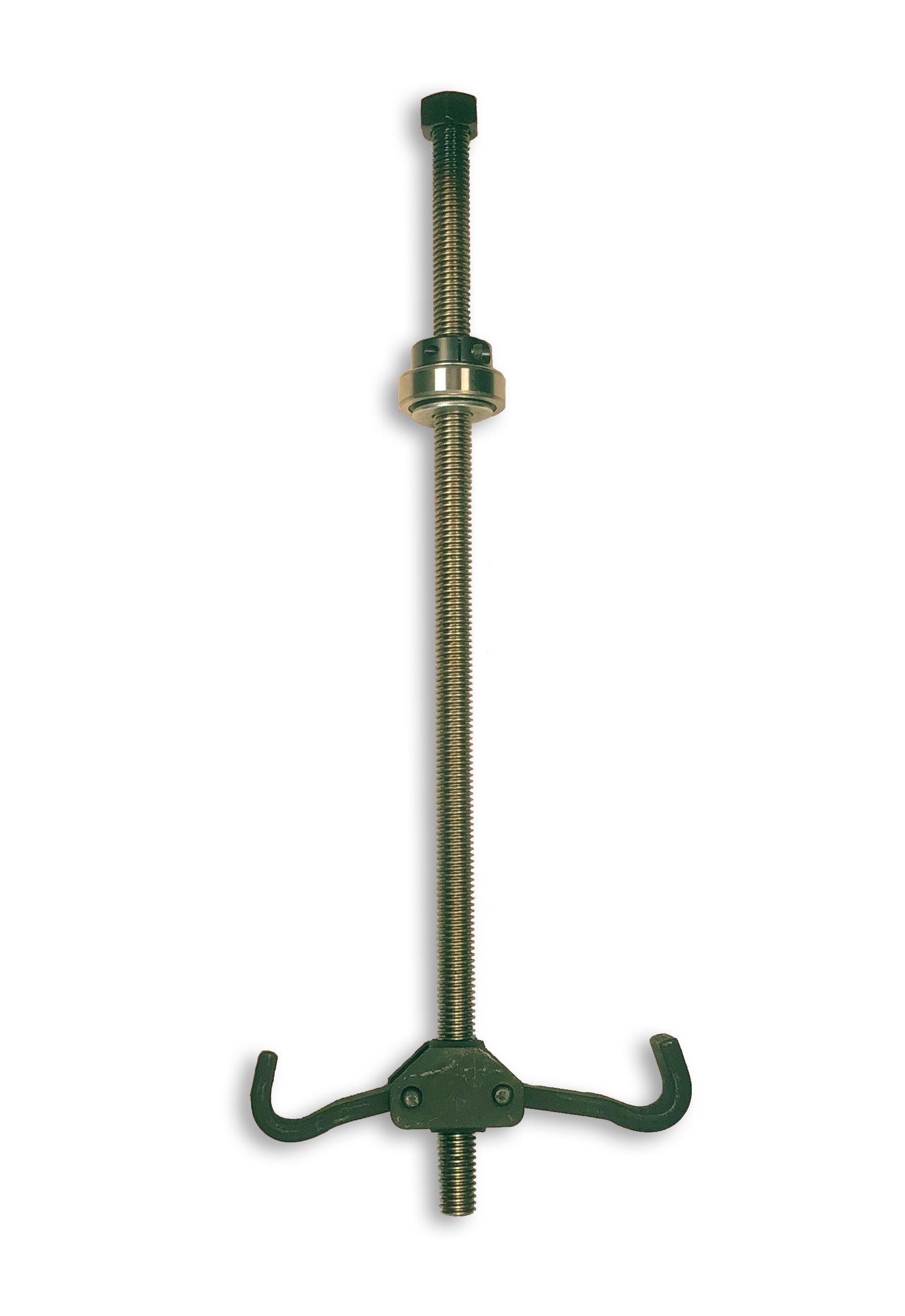
This Spring Compressor makes it easy to install our 18” Front Drag Racing Coil Springs. Standard spring compressors just aren’t long enough to properly compress 18” springs, but our spring compressor is. The spring compressor is inserted through the top shock absorber opening and a long length threaded rod allows the compressor fingers to reach down to the bottom of the spring. A position adjustable bearing located toward the top of the rod seats on the top of the shock opening so the threaded rod turns freely when the spring compressor is tensioned or loosened.
Retail Price: $169.00
To purchase a spring compressor:
This Spring Compressor makes it easy to install our 18” Front Drag Racing Coil Springs. Standard spring compressors just aren’t long enough to properly compress 18” springs, but our spring compressor is. The spring compressor is inserted through the top shock absorber opening and a long length threaded rod allows the compressor fingers to reach down to the bottom of the spring. A position adjustable bearing located toward the top of the rod seats on the top of the shock opening so the threaded rod turns freely when the spring compressor is tensioned or loosened.
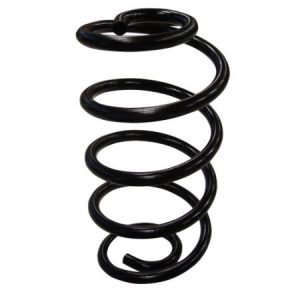
Stock Appearing Double Pig Tail Rear Springs are springs made to resemble black painted stock double pig tail springs and are made for circle track and drag racing classes requiring stock appearing springs and don’t require use of spacers or weight jacks.
All springs are coated black for a ‘stock’ appearance and come in 7″ OD x 14″ sizes, with a range of rates to provide the spring configuration you need for the best handling, traction, and overall performance.
Landrum Stock Appearing Double Pig Tail Rear Springs are made to be durable, hold rate specification and not lose free height. In other words, they’re built to race hard, stay consistent, and perform strong race after race.
Our springs are made of only the best US made High Tensile Chrome Silicon Alloy Steel. Known for its high strength-to-weight ratio, the wire’s alloy mix makes for springs that are lightweight yet exceptionally strong, ensuring superior performance without adding unnecessary mass.
Landrum springs are engineered and manufactured to deliver accurate, consistent performance throughout their range of travel and can repeatedly go to coil bind without losing free height or performance. This is made possible by using superior materials and advanced manufacturing processes:
All Landrum Stock Appearing Double Pig Tail Rear Springs are tested to be within 2% of rate specification. This is documented by a dyno sheet that is included with each spring showing tests results.
Stock Appearing Double Pig Tail Rear Springs aren’t just the best rear coil springs for Stock Car, Street Stock, Hobby Stock, Factory Stock and Drag Racing, they’re the perfect performance springs for high performance street cars too.
Additional Landrum Performance Springs technical information can be found here.