

Bump Stop Springs First Level Category
-
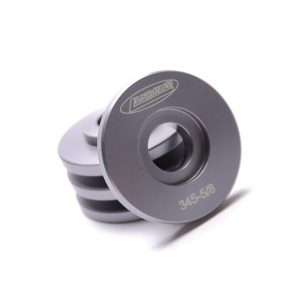
What are Bump Cups?
Landrum Bump Cups are designed for use with Landrum Bump Springs. The bump stop cups provide a stable platform for the bump springs to sit on, ensuring they stay in place during operation.
Bump Stop Cup Sizes
- 14mm (and/or ½”) – Fit 14mm (and/or ½”) shock shaft and bump spring rates of 300-2500 lbs./in.
- 5/8” (and/or 16mm) – Fit 5/8” (and/or 16mm) shock shaft and bump spring rates of 300-2500 lbs./in.
- 14mm (and/or ½”) – Fit 14mm (and/or ½”) shock shaft and bump spring rates of 3000 – 7000 lbs./in.
- 5/8” (and/or 16mm) – Fit 5/8” (and/or 16mm) shock shaft and bump spring rates of 3000-7000 lbs./in.
See Landrum Bump Springs here.
-
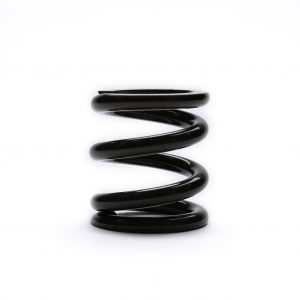
Landrum Bump Stop Springs, also called bump springs, are secondary suspension springs used to control suspension compression in racing applications. Available in a wide range of spring rates, they help racers manage suspension travel, chassis attitude, and handling under different track conditions.
How Do Bump Stop Springs Work?
A bump stop spring works alongside the primary suspension spring. Before the bump spring engages, the primary spring provides the spring resistance to suspension compression. Once the bump spring engages, both springs contribute to resisting additional compression, changing how the suspension responds to increasing loads.
Why Are Bump Springs Used on Race Cars?
Bump springs help racers manage ride height, chassis attitude, and suspension travel during braking, corner entry, and other high-load conditions.
They also allow racers to use softer primary suspension springs while adding resistance later in suspension travel. This provides another way to control chassis balance and handling without relying on a stiffer primary spring throughout the suspension’s entire range of movement.
When Does a Bump Spring Engage?
A bump spring begins to engage when suspension compression closes the space between the spring and its opposing contact surface. This space is called the bump stop gap.
A larger gap allows more suspension movement before engagement, while a smaller gap brings the bump spring into play sooner. Adjusting the bump stop gap allows racers to fine-tune the point at which the bump spring engages during suspension travel.
What Is the Difference Between a Bump Spring and a Bump Stop?
Both bump springs and conventional bump stops help control suspension movement, but they resist compression differently.
A bump spring is a steel coil spring with a defined spring rate that provides predictable resistance through its working range. Conventional bump stops are typically made from rubber, polyurethane, or similar compressible materials and generally provide progressively increasing resistance as they compress.
Bump springs offer a more linear way to add resistance, while conventional bump stops typically become stiffer with increasing compression. The appropriate choice depends on the suspension setup and desired handling characteristics.
How Are Landrum Bump Stop Springs Manufactured and Tested?
Landrum bump stop springs are manufactured in Indiana, USA, using high-quality materials and precision manufacturing processes designed to provide consistent spring rates, durability, and dependable performance.
High-Tensile Chrome-Silicon Steel and Precision Manufacturing
Landrum manufactures its bump springs from high-tensile chrome-silicon alloy steel, selected for its strength and resistance to fatigue.
Advanced spring-design software, precision manufacturing, heat treatment, and pressing processes help the springs maintain their original free height and spring rate through repeated compression cycles.
Individually Rate Tested with Dyno Sheet Verification
Every Landrum bump stop spring is individually rate tested and held to within ±2% of its specified spring rate.
Each spring also includes an individual dyno sheet documenting its tested performance, giving racers verification of the spring’s actual rate rather than relying solely on its advertised specification.
What Bump Spring Sizes and Rates Are Available?
Landrum Bump Stop Springs are available in multiple lengths and spring rates to accommodate different racing suspension setups.
- Outside Diameter: 1.96 inches
- Free Lengths: 2.125 and 2.4 inches
- Spring Rates: 300–8,000 lb./in.
When selecting a bump spring, racers should consider spring rate, applied load, and available travel. Landrum’s bump spring load-deflection tables show the relationship between applied load and spring compression, helping racers compare springs and select the appropriate bump spring for their suspension setup.
Frequently Asked Questions About Bump Stop Springs
Do Bump Springs Require Special Mounting Hardware?
Bump springs typically require mounting hardware, such as bump cups, to support and position them on the shock shaft. Landrum offers Bump Cups compatible with its bump springs and various shock shaft diameters.
Are Bump Stop Springs Linear or Progressive?
Landrum Bump Stop Springs are designed to provide a linear spring rate through their working range. This means the additional force required for each inch of compression remains relatively consistent.
See How Bump Stop Springs Work in Racing Suspensions