
Specification
| Weight | N/A |
|---|---|
| Dimensions | N/A |

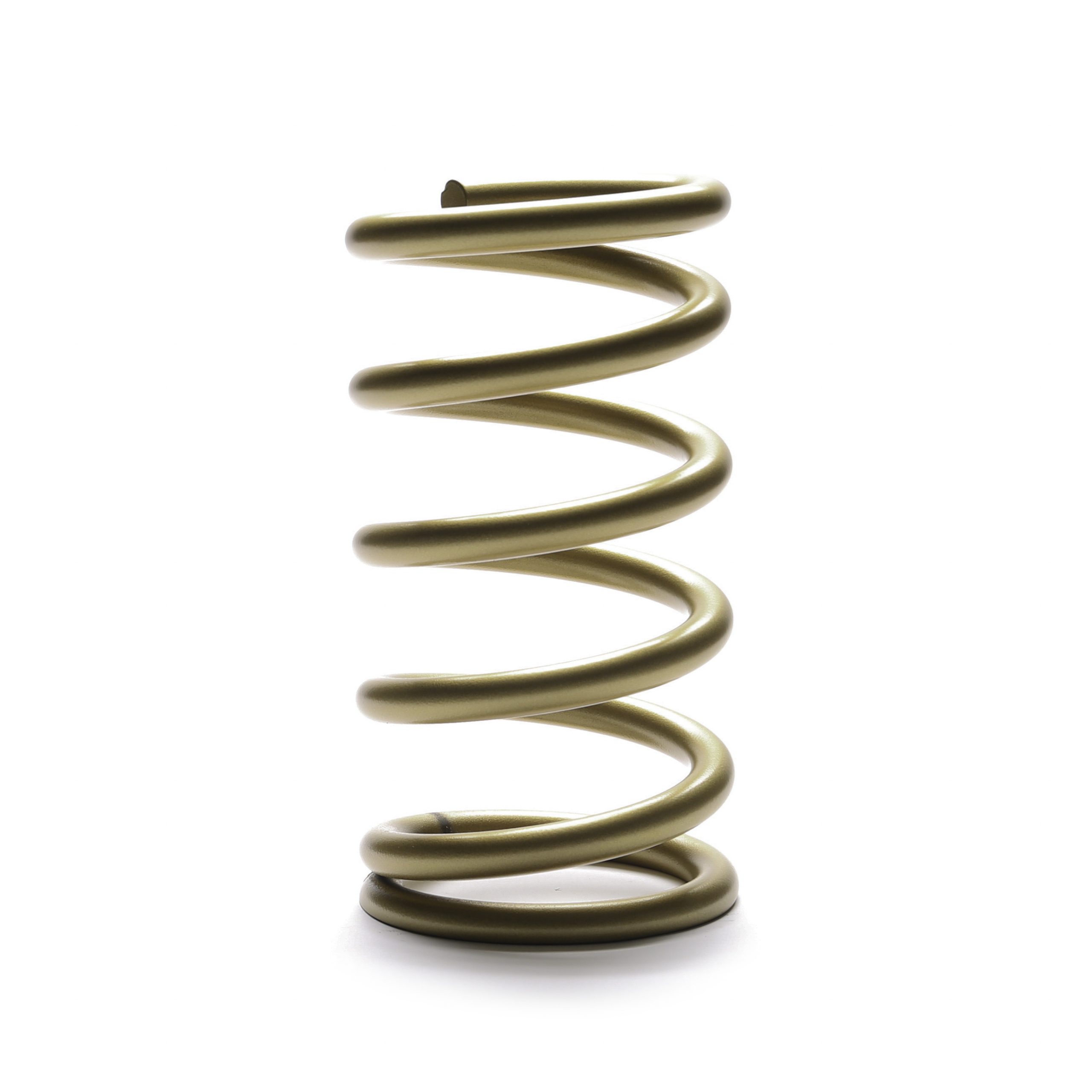
Landrum Gold Series racing coil springs are high-performance linear-rate springs engineered for dirt and pavement circle track racing. Available for front and rear suspension applications in a wide range of sizes and spring rates, Gold Series springs combine high-tensile chrome-silicon steel, precision manufacturing and individual rate testing for consistent, predictable suspension performance.
For more than 25 years, Landrum Gold Series racing coil springs have been a trusted choice for racers who demand consistency, reliability, and winning results. Gold Series springs deliver the predictable and dependable response racers count on lap after lap.
Gold Series racing coil springs are primarily used in dirt and pavement circle track racing, with applications ranging from Modifieds and Late Models to Sportsman, Super Stocks, Street Stocks, Factory Stocks, Hobby Stocks, Pure Stocks and other stock-car and purpose-built racing classes.
While circle track racing is the primary application, Gold Series springs are also used in road racing, autocross and other forms of motorsports where racers need a wide selection of spring diameters, free lengths and spring rates for front and rear suspension applications.
Gold Series racing coil springs are manufactured from USA-made high-tensile chrome-silicon alloy steel selected for strength, durability and consistent spring performance through repeated compression and extension cycles.
Landrum uses advanced spring-design software and proven engineering principles to develop Gold Series linear-rate springs that provide consistent, predictable performance throughout the spring’s working range. We also work closely with racers and chassis builders to design and produce springs that meet the specific requirements of their racing applications.
Every Gold Series racing coil spring is individually tested to verify its spring rate and is supplied with a dyno sheet documenting spring performance through compression.
Each Gold Series racing coil spring is compressed through its working range and tested to verify that its actual spring rate is within ±2% of the specified rate. Testing measures the relationship between load and spring travel to confirm the spring performs at its intended linear rate.
Landrum Gold Series racing coil springs are available in multiple diameters, free lengths and spring rates for front and rear suspension applications. Available Gold Series configurations include:
Use the Landrum Parts Finder to view available Gold Series racing coil springs by diameter, length and spring rate, or contact Landrum for additional product information.
In this video, we demonstrate how stacking two racing springs affects the combined spring rate. Using a scale and load cell, we show why two springs of the same rate produce a lower combined rate and explain the equation used to calculate stacked spring rate.
| Weight | N/A |
|---|---|
| Dimensions | N/A |
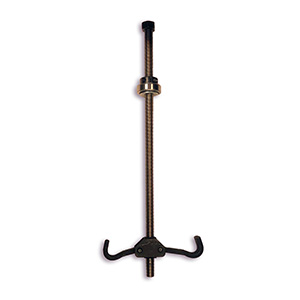
This Spring Compressor makes it easy to install our 18” Front Drag Racing Coil Springs. Standard spring compressors just aren’t long enough to properly compress 18” springs, but our spring compressor is. The spring compressor is inserted through the top shock absorber opening and a long length threaded rod allows the compressor fingers to reach down to the bottom of the spring. A position adjustable bearing located toward the top of the rod seats on the top of the shock opening so the threaded rod turns freely when the spring compressor is tensioned or loosened.
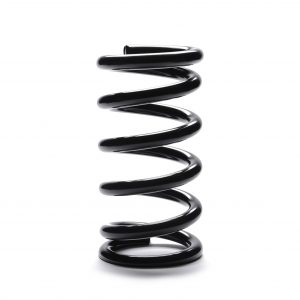
If you’re looking for durable and high-performance stock appearing front coil springs for racing, Landrum’s got you covered. Our Street Stock/Stock Appearing Front Coil Springs are designed for stock car, street stock, hobby stock, factory stock, and other racing classes that require stock appearing front springs—without the need for spacers or weight jacks.
Landrum Street Stock/Stock Appearing Front Coil Springs are crafted from high-tensile chrome silicon alloy steel, cold-wound, heat-treated, and stress-relieved for maximum durability. This ensures the springs can handle repeated load cycles without losing free height or rate. In short, they’re built to race hard, stay consistent, and keep performing strong race after race.
At Landrum, we listened to racers to understand what they wanted in a spring, then designed Street Stock/Stock Appearing Front Coil Springs to deliver the performance they asked for. These springs are engineered at our Indiana facility, where they continue to be produced for unmatched quality and consistency.
Landrum Street Stock/Stock Appearing Front Coil Springs are guaranteed to be within 2% of rate specification. To prove this, we provide a dyno sheet with each spring, ensuring you can have full confidence in its exact rate.
Our Street Stock/Stock Appearing Front Coil Springs come in a variety of diameters, free lengths, and spring rates to fit your specific racing application:
• 5.5” Outer Diameter
• 11” and 12” Free Lengths
• Rates of 100-1400 lbs. per inch
Additional Landrum Performance Springs technical information can be found here.
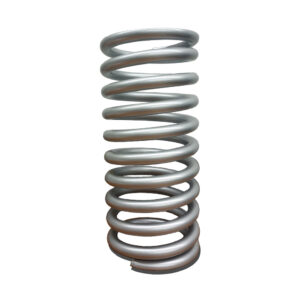
Landrum Tight Helix racing springs are rear suspension coil springs designed for dirt and pavement circle track applications. Their tighter coil spacing and increased number of coils provide different travel and coil-bind characteristics than conventional racing springs, giving racers another way to manage rear suspension movement and chassis response.
Manufactured from high-tensile chrome-silicon steel, Landrum Tight Helix racing springs are precision manufactured and individually rate tested to provide consistent spring rates and predictable performance. Each spring is held to within ±2% of its specified rate and includes an individual dyno sheet verifying its performance.
Tight Helix racing springs use more coils with closer spacing than a conventional racing coil spring of similar dimensions. This tighter helix creates a compact spring design with less available travel before the coils begin to contact one another.
Despite the closer coil spacing, Tight Helix springs are designed to maintain a linear spring rate through their normal working range. The tighter configuration primarily changes the spring’s travel and coil-bind characteristics rather than making it a progressive-rate spring. This gives racers a different way to control available spring travel while maintaining a consistent, predictable spring rate.
Racers use Tight Helix springs to help manage rear suspension movement and load transfer while maintaining a consistent spring rate and predictable chassis response. Their reduced available travel gives racers another way to control how much the rear suspension moves as the car accelerates, brakes and travels through a corner.
On the track, these characteristics can contribute to:
Rather than relying solely on spring rate to influence suspension behavior, a Tight Helix spring allows available travel and coil-bind characteristics to become additional considerations in the suspension setup.
Because a Tight Helix spring has less space between its coils, the coils begin to contact one another with less compression than they would in a conventional racing spring with wider coil spacing. As a result, the spring has less available travel before reaching coil bind.
As the spring compresses and individual coils begin to touch, those coils can no longer contribute to the spring’s active movement. As additional coils make contact, the spring has progressively less remaining travel until it reaches full coil bind, when the coils are fully stacked and the spring can no longer compress normally.
For racers, this makes the relationship between spring travel, suspension movement and the point of coil bind an important characteristic of a Tight Helix spring.
The increased number of coils and tighter coil spacing of a Tight Helix spring help reduce the tendency of the spring to bow outward as it compresses. By keeping the spring more stable and better aligned through its working range, the design can reduce unwanted lateral movement under compression.
Reduced spring bowing can also help maintain clearance between the spring and nearby suspension components, decreasing the likelihood of contact with the shock or other components as the suspension moves through its travel.
Landrum Tight Helix racing springs are designed for rear suspension applications on dirt and pavement circle track race cars. They are particularly suited to IMCA and UMP Modifieds and other Modified and stock-car applications that use conventional rear coil springs.
Available in 11- and 13-inch free lengths with a 5-inch outside diameter, Tight Helix springs provide racers with an alternative to conventional rear racing springs when the characteristics of a tighter-helix, higher-coil-count design are desired.
Landrum combines premium spring steel, precision engineering and individual rate testing to produce Tight Helix racing springs designed for consistent, repeatable performance in demanding racing applications.
High-Tensile Chrome-Silicon Steel
Landrum Tight Helix racing springs are manufactured from U.S.-made high-tensile chrome-silicon alloy steel. Its strength, resilience and fatigue resistance help the spring withstand repeated compression while maintaining its designed characteristics over time.
Spring Engineering and Design
Landrum uses advanced spring-design software and proven engineering principles to develop the tighter coil spacing and increased coil count that distinguish Tight Helix springs from conventional racing springs. The design was also evaluated through multiple test sessions during development to verify its performance before being offered to racers.
Individually Rate Tested
Each Landrum Tight Helix racing spring is individually tested to verify that its spring rate is within ±2% of specification. A dyno sheet is included with each spring, providing measured performance data as the spring is compressed so racers can verify the characteristics of the individual spring they receive.
Use the Landrum Parts Finder to view available Tight Helix racing coil springs by diameter, length and spring rate, or contact Landrum for additional product information.
A Tight Helix spring maintains a linear spring rate through its normal working range. As coils begin to contact one another, however, those coils become inactive, reducing the number of active coils and changing the spring’s effective rate. As more coils make contact, the spring can become progressively stiffer until it reaches full coil bind and can no longer compress normally.
Available spring travel is the distance the spring can compress from its installed or free height before reaching coil bind. This depends on the spring’s dimensions, coil configuration and installed condition. Because adequate travel must be maintained throughout suspension movement, racers should consider both spring travel and expected suspension travel when selecting and installing a Tight Helix spring.
A Tight Helix spring can be used in applications designed for conventional rear coil springs when its diameter, length, spring rate and available travel are appropriate for the suspension. However, a Tight Helix spring should not be treated as an identical replacement because its tighter coil spacing and reduced available travel give it different compression and coil-bind characteristics.
The appropriate spring rate depends on factors such as vehicle weight, rear suspension geometry, weight distribution, available suspension travel and the handling characteristics the racer is trying to achieve. Landrum Tight Helix springs are available in several rates, allowing racers to select a spring that works with their vehicle and overall chassis setup.
The correct free length depends on the vehicle’s rear suspension configuration, installed spring height and required spring travel. The spring must fit the application while maintaining appropriate travel throughout the suspension’s operating range. Racers should verify their vehicle’s spring requirements rather than choosing between an 11-inch and 13-inch spring based on free length alone.
Each Landrum Tight Helix racing spring is individually rate tested and supplied with a dyno sheet documenting the spring’s measured performance. This provides verification of the individual spring’s rate characteristics rather than relying solely on its nominal rated specification.
Tight Helix racing spring versus a conventional racing coil spring: How do load and travel compare?
How does a Tight Helix racing spring make a suspension react faster?
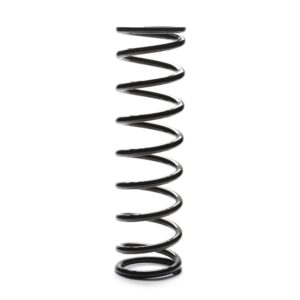
Front drag racing coil springs are taller than OEM springs and use softer rates to give a car the correct ride height while providing more stored energy for instant weight transfer to the rear tires during launch. This helps to improve traction and contribute to more consistent 60-foot and quarter-mile performance.
Landrum Performance drag racing coil springs are produced with superior materials and manufacturing techniques to deliver the performance, reliability, and consistency you need to win.
Landrum drag race springs are available for the front suspension of GM vehicles and are offered in configurations to fit OEM A-Arms and Aftermarket A-Arms with no modifications required. Springs with a 5” outer diameter and 18” length are available for 1964-1972 GM vehicles, and springs with a 5.5” outer diameter and 18” length are offered for 1973 and newer models.
All front springs are closed and ground on one end to provide proper contact with the frame. The opposite end is either open to properly fit into the lower control arm of OEM A-Arms or closed for Aftermarket A-Arms.
A taller, lower-rate front spring compresses farther under the vehicle’s weight than a shorter, higher-rate spring while maintaining the desired ride height. This increased compression stores more energy in the spring and provides additional extension travel.
During launch, acceleration unloads the front suspension, allowing the spring to release its stored energy and extend. As the front suspension rises, the chassis rotates rearward, helping transfer load to the rear tires. This increases available rear-tire traction and helps the car put power to the track more effectively.
Spring rate, spring length, available suspension travel, and shock settings work together to control how quickly and how far the front suspension extends during launch.
When used in the front suspension, drag racing coil springs can provide several performance advantages:
Landrum uses high-tensile chrome-silicon alloy steel for drag race coil springs as it provides the strength, resilience, and fatigue resistance required for demanding drag racing applications while helping the spring maintain consistent rate and free height over repeated compression cycles.
Our Front Drag Racing Coil Springs are available in a range of rates:
The appropriate spring rate depends on factors such as vehicle weight, front-end weight, suspension configuration, and intended application.
Front drag racing coil springs are typically taller and have softer spring rates than OEM springs. Their greater free height allows them to compress farther under vehicle weight while maintaining the required ride height, providing greater stored energy and more available suspension extension.
Stored energy in a drag racing spring is the potential energy created when the spring compresses under the vehicle’s weight. The amount of stored energy depends primarily on spring rate and how far the spring is compressed from its free height. A longer, softer spring stores more energy than a shorter, stiffer spring under the same load because it compresses farther while maintaining a similar installed ride height.
Front drag racing coil springs can maintain the desired ride height despite being taller than OEM springs. Their softer spring rates allow greater compression under vehicle weight, resulting in the intended installed height.
Landrum drag race springs are cold wound, not hot wound. Each is properly heat treated and stress relieved to ensure the sides of the spring remain parallel during installation.
See our drag racing spring technical information for additional technical and application information.
Landrum’s spring compressor is designed to make installation of its 18-inch Front Drag Racing Coil Springs easier.
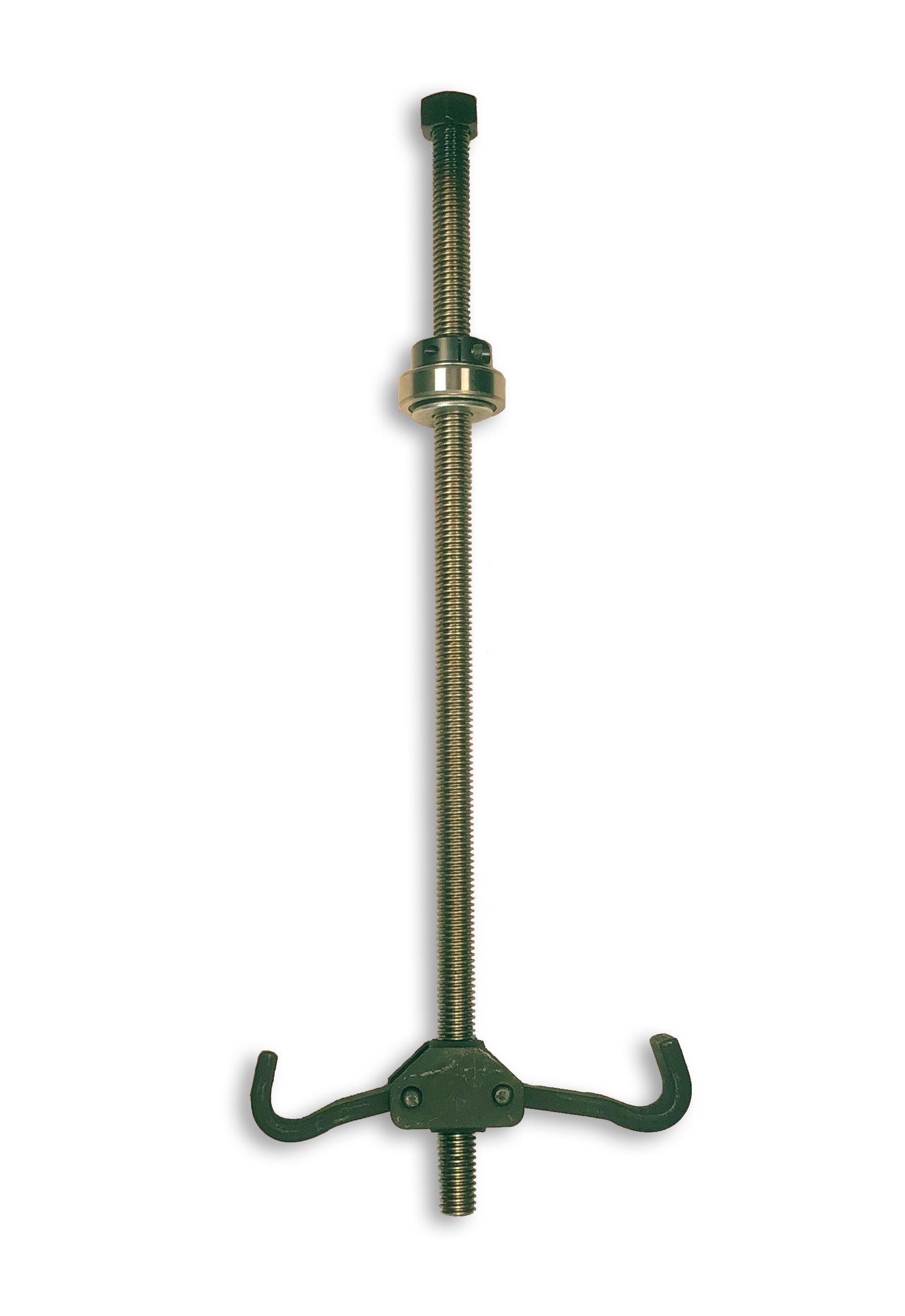
This Spring Compressor makes it easy to install our 18” Front Drag Racing Coil Springs. Standard spring compressors just aren’t long enough to properly compress 18” springs, but our spring compressor is. The spring compressor is inserted through the top shock absorber opening and a long length threaded rod allows the compressor fingers to reach down to the bottom of the spring. A position adjustable bearing located toward the top of the rod seats on the top of the shock opening so the threaded rod turns freely when the spring compressor is tensioned or loosened.
Retail Price: $169.00
To purchase a spring compressor: